%20--%3e%3cpolygon%20points='24.7%201%200%201%200%207.6%208.5%207.6%208.5%2039.4%2016.1%2039.4%2016.1%207.6%2024.7%207.6%2024.7%201'/%3e%3cpath%20d='M34.1,32.4l-4.9-22.7h-7.9l9.1,33.1c-.4,1.7-1.1,2.9-3.7,2.9h-2.6l1.9,6.6h1.5c4,0,8-1.2,10.3-9.2,1.8-6.4,8.9-33.3,8.9-33.3h-8l-4.6,22.7Z'/%3e%3cpath%20d='M91.7,8.7c-8.7,0-12.7,6.5-12.7,16.1s3.6,15.3,13.8,15.3,7.2-.9,9-1.6l-1.2-6c-2.4.8-4.9,1.2-7,1.2-4.3,0-7-2-7.2-7.3h16v-4.8c0-7.5-2.9-13-10.7-13ZM86.5,21c0-3.3,1.7-6.4,4.7-6.4s4.1,2.7,4.1,6.4h-8.8Z'/%3e%3cpath%20d='M218,8.7c-8.7,0-12.7,6.5-12.7,16.1s3.6,15.3,13.8,15.3,7.2-.9,9-1.6l-1.2-6c-2.5.8-4.9,1.2-7,1.2-4.3,0-7-2-7.2-7.3h16v-4.8c0-7.5-2.9-13-10.7-13ZM212.9,21c0-3.3,1.7-6.4,4.7-6.4s4.1,2.7,4.1,6.4h-8.8Z'/%3e%3cpath%20d='M126,1h-10.7v38.4h7.6v-11.8h5c6,0,11.3-3.8,11.3-14.1s-5.5-12.5-13.1-12.5ZM125.9,20.9h-3.1V7.6h3c3.7,0,5.4,1.8,5.4,6.3s-1.5,7.1-5.3,7.1Z'/%3e%3cpath%20d='M150,12.9c-.2-1-.5-2.4-.8-3.2h-6.9c.5,1.9.7,4.6.7,7.9v21.8h7.4v-20.3c1.1-2.2,4.5-3,7.4-3v-6.8c-3.5,0-6.5,1.7-7.7,3.6Z'/%3e%3cpath%20d='M192.6,40.6c0,3.5-1.6,4-4.7,4h-1.5l1.9,6.6h2.3c6.3,0,9.3-3.2,9.3-9.8V9.7h-7.4v30.9Z'/%3e%3crect%20x='192.2'%20width='8.4'%20height='6.4'/%3e%3cpath%20d='M247.4,33.7c-4.8,0-6.6-2.8-6.6-9.6s1.9-8.9,6.2-8.9,3.4.4,4.9,1l1-6.4c-1.3-.5-3.7-.9-6.2-.9-10.6,0-13.4,6.7-13.4,15.9h0c0,10.7,4.6,15.3,12.4,15.3s5.9-.5,7.4-1l-.9-6.1c-2,.4-3.7.6-4.7.6Z'/%3e%3cpath%20d='M264.7,30.2v-14.2h5.4l1.4-5.8h-6.9V2.1l-7.3,1.9v26.8c0,5.3,2.4,9,8.2,9s4.9-.2,4.9-.2v-5.7h-2c-3,0-3.8-1.3-3.8-3.7Z'/%3e%3cpath%20d='M64.3,8.8c-3.3,0-5.8,1.6-7.3,3.4-.2-1.1-.5-2.1-.8-2.6h-6.6c.5,1.9.6,4.4.6,7.4v34.4h7.3v-13.8c1.5,1.5,3.8,2.4,6.2,2.4,8,0,11.2-6.6,11.2-16s-3.1-15.2-10.4-15.2ZM62.1,33.8c-1.6,0-3.1-.6-4.6-1.8-.3-1.6-.4-3.7-.4-6v-3.3c0-1.8.1-3.8.4-5.1,1.4-1.4,3-2.5,5-2.5,3.2,0,4.6,3.2,4.6,9s-.9,9.6-5,9.6Z'/%3e%3cpath%20d='M173.6,8.6c-9.5,0-13,6.7-13,15.7s3.5,16.1,13,16.1,13-6.8,13-16.2-3.3-15.7-13-15.7ZM173.6,34.2c-3.6,0-5.5-2.9-5.5-9.9s2.2-9.5,5.5-9.5,5.5,2.2,5.5,9.5-1.9,9.9-5.5,9.9Z'/%3e%3c/svg%3e)

2026.2/2
Exhibition Introduction: Keio Museum Commons x Iinuma Kannon Enpukuji Temple Saga Book Temptation: A Dream in Gorgeous Printed Books
In this series, I will introduce exhibits related to characters and typefaces. This first article is about “Keio Museum Commons x Iinuma Kannon Enpukuji Temple Saga Book Temptation: A Dream in Gorgeous Printed Books,” held at Keio Museum Commons from September 30 to November 28, 2025 (the exhibition is now closed).
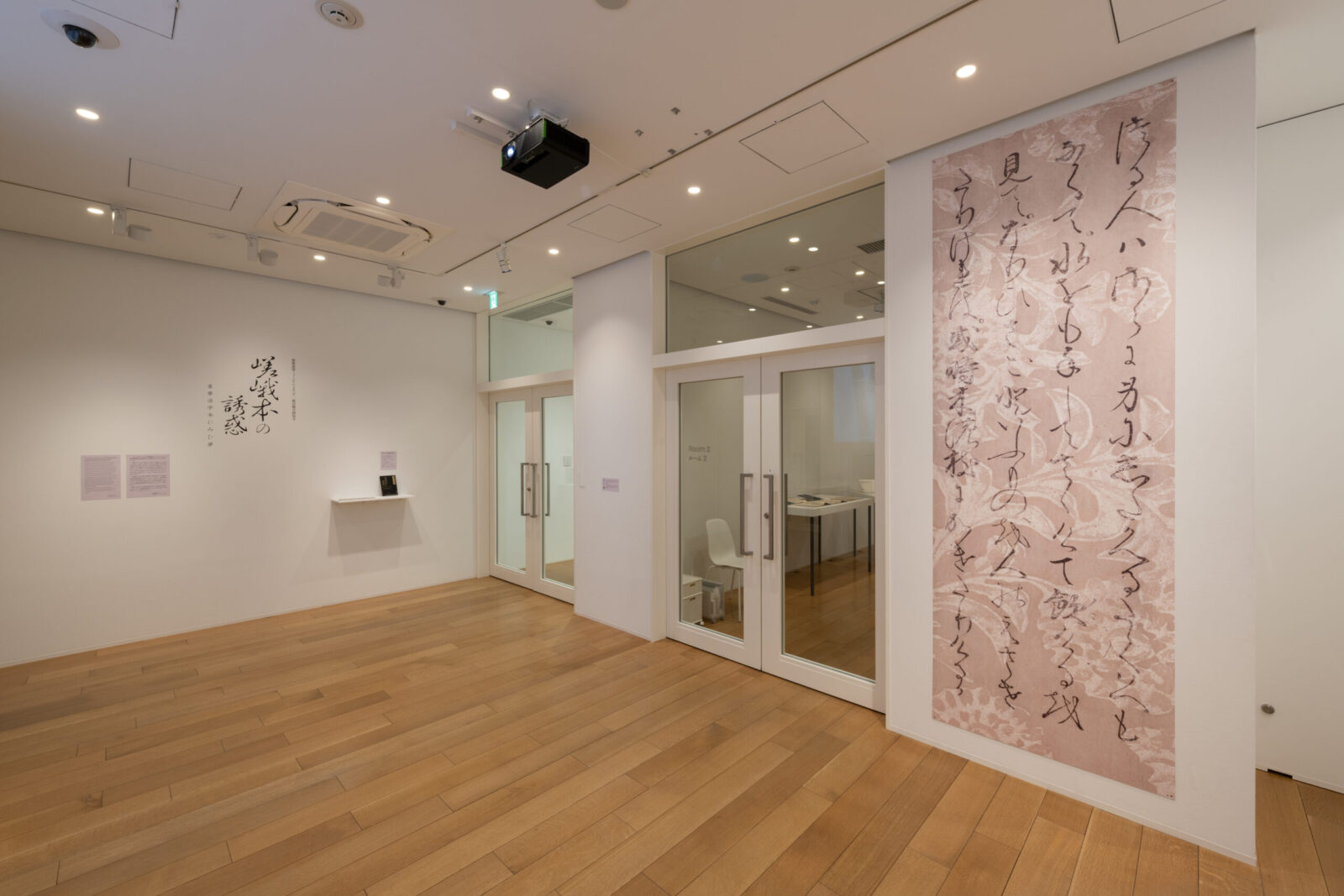
Saga books were printed in the early Edo period using elegant wooden type with unbroken linear text in the Kōetsu style, characterized by beautiful paper and binding. The name derives from its place of publication, Saga in Kyoto. It is now recognized that Suminokura Soan was the principal figure behind its production.
Saga books sometimes exist in multiple versions, and this exhibition offered a rare opportunity to compare them.
In the section displaying several volumes of “The Tales of Ise” with pages with the same content side by side, I was able to see differences between the versions. Although the content of the main text remained the same, the characters have been rearranged and changed to different typefaces, which shows that it was evident that the makers were engaged in a very labor-intensive task.
I wondered if it was just a game, but these were listed as one of the ways to bring the books closer to one-of-a-kind manuscripts in the world. Even meticulous details that readers might not notice were imbued with meaning. The fact that it is possible to rearrange some characters using type, something that would not be possible with a single woodblock, is something that the fonts I create share in common, so it was an unexpected connection that I found very moving.
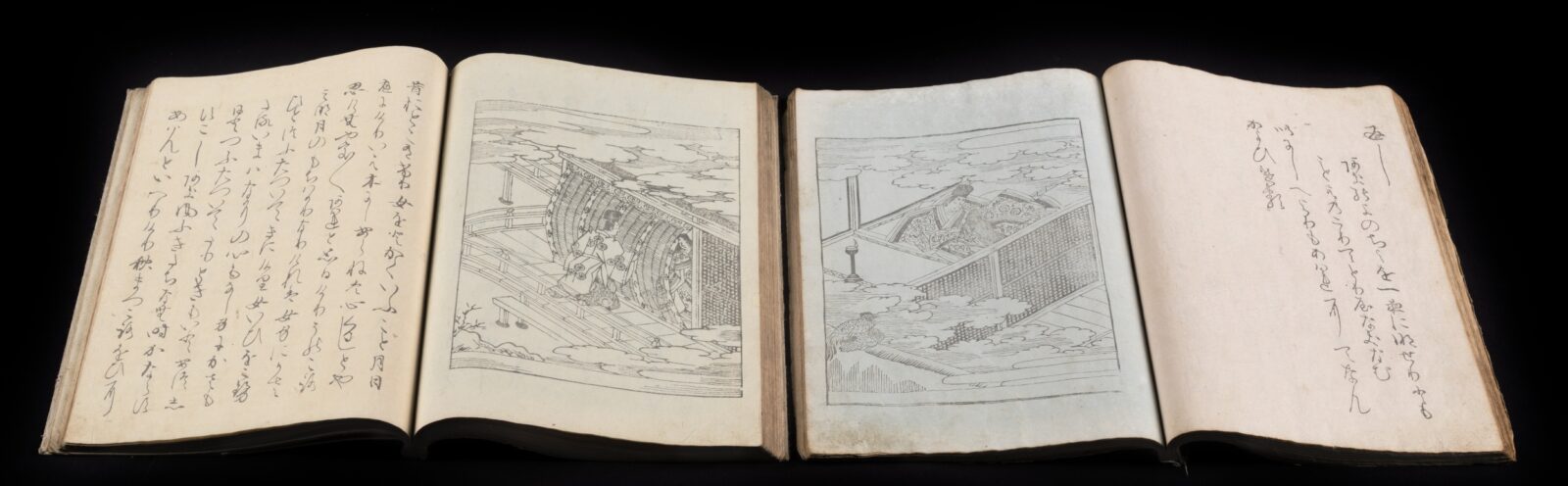
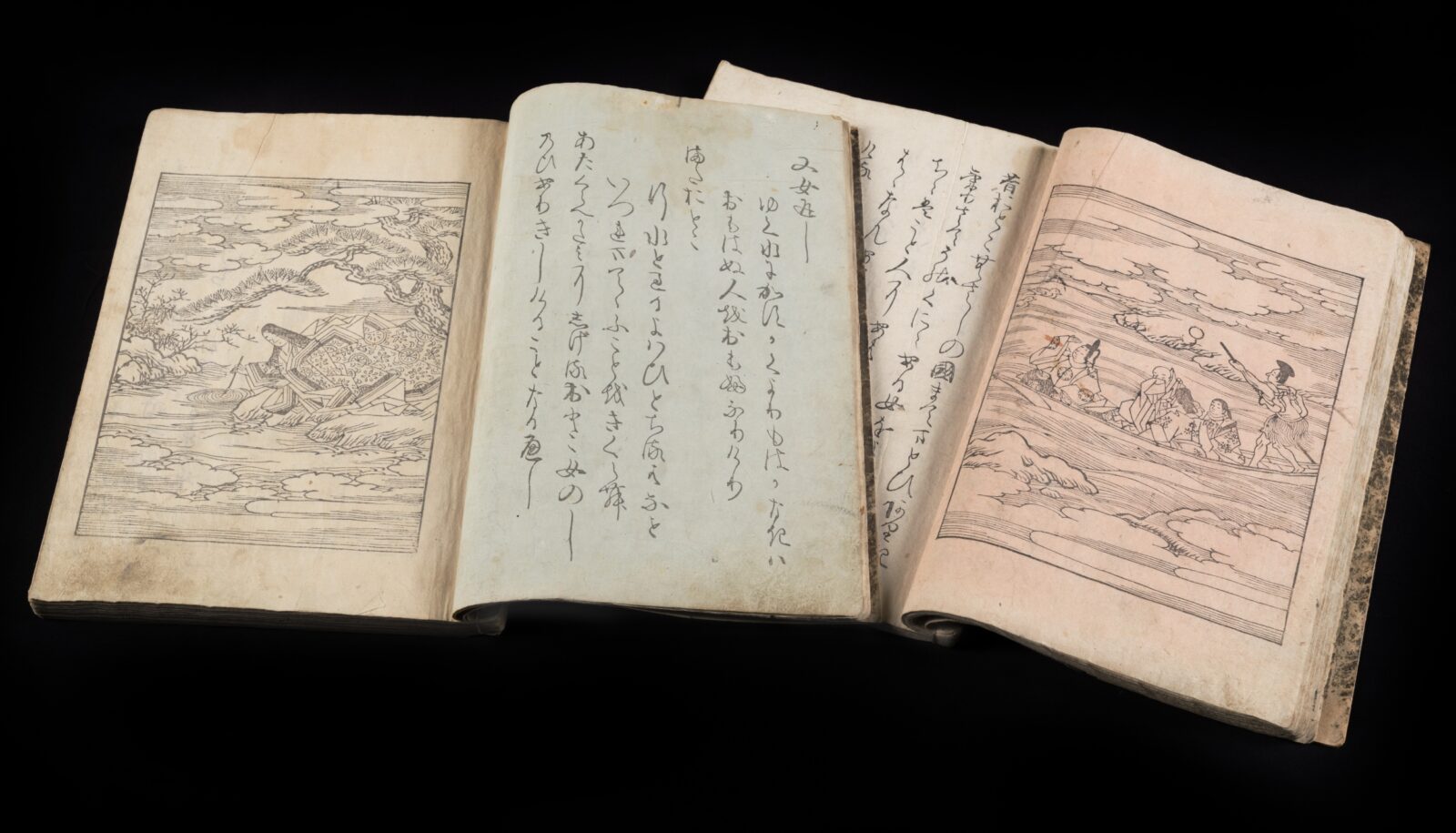
The spacing between the lines, the margins at the top and bottom of the page, and the beautiful printing show the ingenuity that went into making the flowing, rhythmic characters easy to read, and I was amazed by the precision of the workmanship. I was fascinated by the mysterious Saga books, with endless questions about how the type was carved and who wrote it.
I have visited the Keio Museum Commons several times, as it has held exhibitions of books and ancient calligraphy. The exhibition introduced in this article has ended, but if you’re a fan of characters, why not check out future exhibitions?
(RK)
“Keio Museum Commons x Iinuma Kannon Enpukuji Temple Saga Book Temptation: A Dream in Gorgeous Printed Books”
Exhibition site: Keio Museum Commons
URL: https://kemco.keio.ac.jp/all-post/20250930/
[1] [2] [3] Photographed by: Katsura Muramatsu (Calo works Co. Ltd.)
[2] (Left) “The Tales of Ise” Published in [Keichō 13 (1608)], Saga book Type 2 edition, 2 volumes, 1 copy in existence / (Right) “The Tales of Ise” Published [around the Genna and Kan’ei era], 2 volumes, 2 copies, owned by Iinuma Kannon Enpukuji Temple
[3] “The Tales of Ise” Published in [Keichō 13 (1608)], Saga book Type 1 edition, 2 volumes, 2 books, formerly owned by Sououin Temple, owned by Iinuma Kannon Enpukuji Temple
Reference material: Exhibition Catalog “Keio Museum Commons x Iinuma Kannon Enpukuji Temple Saga Book Temptation: A Dream in Gorgeous Printed Books”